FansOfAll
CJ The X
CJ The X

patreon


The Gift: Chapter 6 - A Female Property

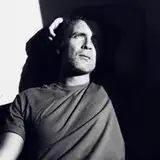
[me in Variety Bar on Sauchiehall st Glasgow, where I had drank vodka on the rocks in 2015]

Salutations readers, we are here a week late because we are busy and I am in Scotland with family, friends, and the greatest job in the world. Reaping the riches of the previous 6 months of Grown Up Work. Cashing cheques, solo travelling, performing things I have prepared and polished at great financial, social, spiritual expense. It simply could not be more worth it.

Follow ur dreams. It might take 26 years, it might take more, but someday you may also find a stage that you feel free on, money you are proud to have, and friends you are excited to make.

So excited to see you Saturday Edinburgh! Then to do some REAL touring over the next week.

………{{]]]]]]]]]]]]]]

Chapter six was a fitting kismet entry into the research & pondering path I’ve been on for the previous month concerning gender. How to reckon with reality, reckon wth people’s subconscious biases, reckon with feminism as a genuine concept, the genuine tension between two kinds of feminism: make men more feminine & women more masculine, or ratify femininity as a category, cling to it protect it assert its value as a different but equal category to “masculinity”. Related: to critique and deconstruct Rationality as an oppressive, Western, masculine project, or reclaim it in the name of progress and enlightenment, equality and inclusion. In 2023 I thought Descartes an enemy, then discovered over the years that Cartesian rationality was an essential tool of feminists in critiquing the irrational denial of their right to vote and work. The mandate of heaven to dominate women supposedly planted in the breast and brow of Men by God doesn’t hold up in the face of secular, Cartesian rationality.

Press X to Doubt.

Now, in the lecture I gave in Toronto and I will give again much more pristinely in Edinburgh on Saturday, I am running all the way to Socrates and Plato in celebration of dualism, transcendent rational truth.

No one said philosophy was gonna be easy. No one said you’d be the same by the end.

+++++_______”””””””

Shout out to the extremely concise division between gender & sex in this chapter, probably the cleanest single paragraph on it I’ve read, just as an incidental sidequest.

“By “gender” I mean to indicate the cultural distinctions between male and female—not the physical signs of sex but that whole complex of activities, postures, speech patterns, attitudes, affects, acquisitions, and styles by virtue of which a woman becomes feminine (a man “effeminate”) and a man masculine (a woman “mannish”). (103)

__——-____-__—-——-

Love that Emily Post’s Etiquette came up. Another sortof sub-book study that has been echoing, as it’s come up in other research on fashion, status, society and aesthetics.

I brought The Lost Art of Dress by Linda Przybyszewski with me to the UK. Hoping to go deeper into it for pleasure.

++++++++++++::::::::::::::::

I appreciate the thoughtful analysis of how the gifting of women & childrearing functions in communities, and the way that the woman is the "gift bearer" and this is a functional role rather than a "mere" transfer of property.

I agree that cultural mythologies and traditions need to be challenged with wisdom and knowing, rather than thrust off like GYAHHHHHHH. If for no other reason that without awareness of what value people get out of that old story, and without fulfilling that need soemhow, people are very likely to willingly return to the old story warts and all.

I'm reading Pagan Christianity by Frank Viola and George Barna and I related a bit to this quote here haha:

At this moment, all the rebellious hearts are applauding and plotting to wield the above paragraphs to wreak havoc in their churches. If that is you, dear rebellious heart, you have missed our point by a considerable distance. We do not stand with you.

Pagan Christianity p. 5

Anyways the long footnote around page 101 does a good job of really contending with this. Firstly I personally totally agree that a wedding is a social event by design and that's actually good. Then I love the empathy towards the feminist position, the warning about blowing up tradition without fully udnerstanding it, and then the initial proposition of a compromise/alternative/addendum that advances the feminist cause.

For the feminist wary of the father's right to bestow his daughter, but wary as well of what I earlier called the perfect freedom of strangers—that pure individualism which is corrosive to social life—we might, rather than drop all sense of persons as gifts, extend a "female" submersion in the group to the groom, instead of a "male" individualism to the bride... (101)

Hard balance to strike, the extension of female dignity to men and masculine dignity to women, while still presenting stories and archetypes that genuinely inspire people.

Like Hyde points out in this chapter, the "Masculine Ideal" used to include much more eros responsibility, spirituality, gifting and sanctity, versus the extremely profane and capitalist ideal of Manhood we still see today.

I think (maybe cause its the 80s) Lewis Hyde doesn't seem very nervous about confronting social issues like capitalism, socialism, feminism, racism quite directly, without derailing his intrinsic focus on Gift Life with apologies, AND without ignoring it all, and that's nice.

Ok strange splattershot here, looking forward to seeing what ppl have to say. Feel like this is a super wide open discussion starter of a chapter on gender, sex, and tradition. U KNOW i be musing about this but its something I always gain from hearing peoples perspectives of, man, woman, trans, NB, and from diverse cultures too.

Female and Male Sacrifices Below

The Gift: Chapter 6 - A Female Property

Comments

"The belief that life is a gift caries with it the corollary feeling that the gift should not be hoarded." (pg. 126) It's a cliche to say that surviving isn't the same as living, but cliches are good sometimes and people need to back off, honestly. The difference between surviving and living is as varied as the stories told about it, but it seems to me that the core change is whether it returns anything, the way a gift increases with the giving. Surviving is about taking, living is about giving. What I think people find unfair about this sentiment is that you can't live unless you survive first. If you never take, you will have nothing to give. If any link in the chain of a gift cycle breaks, then giving can become an act of self-sabotage. If someone falters, then we find that what they are taking has started to diminish instead of increase. Then the whole system falls apart. "Couldn't we pay social workers as we pay doctors, pay poets as we do bankers, pay the cellist in the orchestra as we pay the advertising executive in the box seat? Yes, we could. We could - we should - reward gift labors where we value them." (pg. 139) "Where we value them" is the key phrase, and it punches me in the gut. The theme of this chapter is: there are things in this world which are so important that we would never even want to assign them a value, and because of that, the market hates them. Poetry only matters if people are buying, so poet is only a job if you can convince people to value your poems. The art itself is meaningless if you don't know how to sell it, and in selling it, you may lose the art in the process. How many poets have died unpublished because they never got past surviving? How many great works are lost to time because they had no clear avenue to be given, and so they were hoarded? It's always in the back of my head just how much art we lose when we convince people it isn't their birthright to create things. "My point here is simply that where we [pay for gift labors] we shall have to recognize that the pay they receive has not been 'made' the way fortunes are made in the market, that it is a gift bestowed by the group... The cleric's larder will always be filled with gifts; artists will never 'make' money." (pg. 139) This is always the tension. I see myself as having two jobs, one which 'makes' money, and one which doesn't. I hate the first one, and when I do it, I'm surviving. I love the other, but if it was all I did, I couldn't live. Maybe one day, I will make something good enough to receive the gifts I hope for in return, but that's not the deal. I always have to remind myself that. You can give all day long, but if you only give in the hope of getting something in return, you aren't really giving gifts. I'm stuck in the market mindset: I am trying to generate value. I just need to focus on giving, and trust that the increase is part of the process. It sucks so much, and for some reason, that's why I love it.

Chandler Sterling

Wonderful post. I reallly loved your thoughts on gender and sex, the idea that the physical/biological is also malleable and complex and ever changing. Will be thinking on this for a while. Yes! Yes! Yes! To the interpretation of the Abraham and Isaac story being rooted in the need to question god. My favorite religious professor in college talked about the same interpretation, and it really is the only lens that makes sense to me. When I was a kid and heard Christians discussing it as an endorsement of unquestioning faith I was always amazed and horrified. Like?? No? Right? No there are some lines we will not cross, no this can’t be right. I feel like I walked away thinking that there *are* some things we must place above God. Which, admittedly, didn’t account for the fact that God was also opposed to child-murder, and that questioning and doubt can be a part of him. I love the idea of this doubt as a gift, of unpredictability and entropy giving way to their own forms of creation. Thank you

Megan S.

what to say about this one? I have a lot of contrarian takes around gender but I feel like at least some of them are motivated by trauma. I am a trans woman, and honestly I did not think that much about that fact until I worked at Target for a few months and got misgendered constantly. until then, transness was like background radiation to me. now I intensely consider it all the time, like- how are people looking at me? I don't know. do keep that in mind when you're reading what I say. //////// the sex/gender dichotomy //////// CJ makes a point in the initial post about the division between sex and gender, but the more time I spend reflecting on it, the more I realize that this division is a false dichotomy. especially in the context of transness, I feel like a lot of "sex and gender are different" rhetoric kind of naturally leads to "nobody was saying you could change your sex". but I was saying that! in Judith Butler's Gender Trouble, which I largely disagree with because I think poststructuralism might not be for me, Butler makes the apt point that: > It would make no sense, then, to define gender as the cultural interpretation of sex, if sex itself is a gendered category. Gender ought not to be conceived merely as the cultural inscription of meaning on a pregiven sex (a juridical conception); gender must also designate the very apparatus of production whereby the sexes themselves are established. As a result, gender is not to culture as sex is to nature; gender is also the discursive/cultural means by which “sexed nature” or “a natural sex” is produced and established as “prediscursive,” prior to culture, a politically neutral surface on which culture acts. (p. 11, chapter 1 section II) Hyde's distinction between the physical and the social here brings a kind of credence to the physical, as if it is not a thing that is malleable, ever-shifting. do I expect this book to have my exact gender politics? not really, no - but I would be remiss if I didn't mention it. to even draw a line between sex and gender is to miss the forest for the trees, in my mind; they are one and the same, so deeply intertwined that to draw a distinction is often useless and occasionally harmful. if I keep going here I'm going to start quoting Serano and you don't want me quoting Whipping Girl so I'm just going to avoid all of that and move on //////// the reconnection of man and God //////// so on p. 127 where Hyde cites the story of Abraham and Isaac: > The New Testament repeats the motif: the Lord gives His son and the life of that firstborn is sacrificed as a gift to reconnect man and God (...) look. look. I'm going to sound like an insane person but bear with me. so I'm Jewish and part of the way that I practice Judaism is knowing that God is a thing that is meant to be questioned, to be interrogated, to be discursive about. and I pretty strictly disagree with Hyde's interpretation of this story! I do not believe that Isaac's life was meant as a gift, because I believe that Isaac's life is fundamentally a literary device used to show us that God can be incorrect. Abraham is confronted at the end of this tale with the divine equivalent of "haha, jk don't do that", and it is from this that we can learn that in our modern-day society when God is not directly speaking to us and all of our "messages from God" are fundamentally interpretation that what YOU think God is saying might be WRONG, because God is in you. it is impossible to truly understand and act on divine will, because to do so would make God human. so what is the gift? Hyde is correct when he says that the gift's modus operandi is the reconnection of man and God, but the gift is the knowledge of one's own agency over divine will. Abraham was going to kill Isaac because he thought that was what God wanted him to do, and it wasn't. this means that Abraham can act independently of God, that his intuition is capable of leading him astray. is this not a beautiful thing for God to bestow upon man, and for man to bestow upon God? is this not the fundamentals of all unpredictability and entropy? this is kind of a scatter-brained thought, I had a nightmare last night about video game save files or something. if you want clarification I'm glad to provide it, but fundamentally my relationship to religion is this: God is a force that exerts divine will, and we are created in God's image because we are capable of intuition that we do not understand. our intuition makes us like God, and is our means of communication with God, but we must doubt it constantly. it is the Jewish tradition to be endlessly discursive about the Tanakh, because that is the fundamental thing that brings us closer to God. //////// get your ass off Twitter 'cause it gives you fucking mental illness //////// > Gift labor requires the kind of emotional or spiritual commitment that precludes its own marketing. (p. 139) ART PROMOTION. what does it mean to promote art? I don't know, I don't do it. I have a Bluesky account where I post when I make something (you can follow me if you ask) and that's it. but I see many artists falling into the trap of marketing, of attempting to hit big, of wanting recognition and then doing so at the price of one's "artistic integrity". look, this is a point that CJ already covered in a video I forget the title of at the moment - I think it's the "art sins" video, relating to the notion of "being a sellout". but my brain saw this, in conjunction with "artists will never 'make' money" (p. 139 also) and threw the shift into a higher gear. who knows. the process of promoting art seems utterly miserable, and marketing oneself as an artist seems awful. all my work spreads by word of mouth. I would like some recognition, because the only way I feel like I can know if my art is good - if my gifts are good - is if people take them. but who knows. I will keep making things anyway. it's perhaps because of the art promotion cycle that men seem to hallucinate that they're discriminated against in literature, because to create literature proper is, as Hyde says, never 'making' money. perhaps, according to Hyde, men are more willing to be outspoken about their work, more marketable, less eros and more logos. but, again, I am falling back into gender norms as so often happens this thought is kind of half-baked but there's something here.

tulips


More Creators