First script of two! Call of Duty Black Ops 6 is Propaganda
Added 2024-10-31 23:47:54 +0000 UTC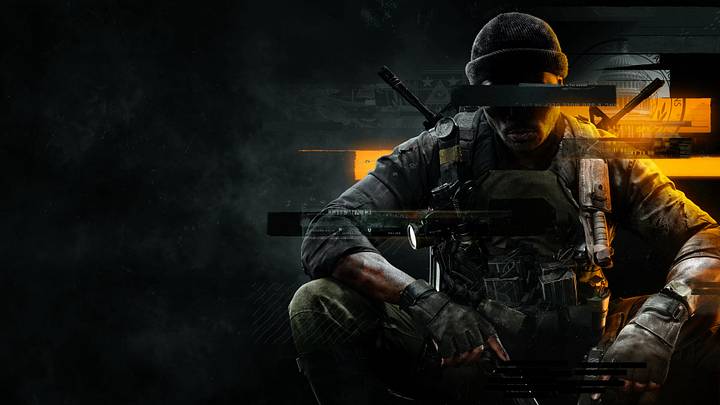
Hey everyone!
Doing the usual thing of posting scripts for which the video portions will soon follow, just so I don't have a month of no income which would make things, uh, extremely difficult. The MGS video, as you can imagine, took a lot out of me, and it just so happened to coincide with a lot of absurdly tiring health stuff. As usual, I sincerely hope you can understand, and know that I'm working constantly to get the videos done and uploaded ASAP. All things going right, both vids will be available to you this weekend.
This first script was kind of an unexpected one for me—I wasn't intending to play Black Ops 6 but there it was on my PC/Xbox, and I've kinda always been a sucker for these campaigns.
But I guess that's just it—it felt like, more than ever, this campaign (as much as other people seem to really enjoy it, and not without reason) was trying to sucker me in. To make me forget about what was actually going on in the background. I've done a lot of videos on these campaigns, and it felt important to continue that ongoing interrogation here. Pretty proud of it, and excited for how the video is going to come together.
I'll post the other script in a second as well. I hope you get a kick out of it. I seriously would not be able to keep operating the channel without your continued support. I cannot tell you how appreciative I am of said support and your patience. I promise a whole lot of videos will be coming your way this month, now that the script work is out of the way for a bunch of them. Exciting stuff. Even with the stresses, I love doing this job. Thank you for allowing me to do it.
Anyway, here's the script!
Thanks again,
Hamish
Writing on Games
---
At first glance, Black Ops 6’s campaign doesn’t feel like the Call of Duty you’ve come to know. In a series defined by aggressive linearity and rigidity in the presentation of its endless shooting galleries—an attempt to carry you through a highly curated series of Hollywood-esque setpieces—you suddenly get presented with stealth missions, heists in which you get to plan your approach, open world segments genuinely reminiscent of The Phantom Pain. Hell, the zombies mode into which countless hours have been poured by stoned students the world over makes an appearance. Indeed, every part of the Call of Duty mechanical pie has been repurposed to fit within the campaign’s narrative.
Further, the Black Ops series continues to represent a more lighthearted mishmash of tone that, while inconsistent in its flitting between dark spy thriller and over-the-top camp, beats the self-seriousness of the Modern Warfare reboot in my eyes.
Its sound design is incredible—the pop as a tight three round burst cushions its way through armour and into the person wearing it, continues to be as morbidly satisfying as the roar from the gun firing it is ferociously reverberant. The fundamental mechanics of Call of Duty have never presented so much trust in the player. In short, Call of Duty Black Ops 6 makes war fun. It’s just, that’s a prospect I just can’t quite shake from my mind. War is fun. That sounds a whole lot like propaganda to me.
See, I have no idea what the intentions of the writing team for Black Ops 6 were, but while I was playing I couldn’t help but notice a level of narrative manoeuvring, encompassing both written dialogue and the mechanics through which you interact with the story, that made me feel… a little uneasy.
Because, on the one hand, it’s a much more traditional Call of Duty campaign than most in its writing. At the start of the game your crew of big military personalities conducts an operation to retrieve an asset, the Iraqi defence minister, only to have said asset abruptly taken out by series mainstay Adler. Your crew expresses dismay at their work being so unceremoniously snuffed out before they could extract any information, and my first thought was, “huh, so at least they’re not trying to make us root for Adler this time around.”
And setting Adler up immediately as a foil to your efforts, rather than his violent sociopathy marking him as the leader to be followed as was the case in Cold War, establishes a baseline morality – that in this world there exists those trying to help, and those trying to hinder. Those saving, and those killing; again, marking a significant change from Cold War and, in many ways, an attempt to go back to the characterisation of Call of Duty’s past.
Because look, the praise I’ve seen heaped upon this supposedly groundbreaking campaign rings a little weird to me—mechanically speaking, it’s not so much different than its predecessor, 2022’s Cold War, didn’t also pull off, in widening the scope of how a Call of Duty focused on espionage and subterfuge could play. Importantly though, while I think that such good vs bad characterisation makes for a more traditionally cogent story overall, you lose what flicker of vision that prior Black Ops game had—falling back into some of the series’ more overtly propagandistic trappings in the process.
See, I still argue that, whether intentional or otherwise, as failed an attempt at propaganda as it very well might have been, Cold War should be deemed a failure of propaganda; as it dispassionately depicted your crew performing what seemed to me to be nakedly abhorrent actions, then wheeling in a former president with his own well-documented history of atrocities and cover ups and having him more or less say, “I approve of this. Go do more of this stuff.” A near-identical speech to the one you get later from Gorbachev in the KGB.
While the 2019 reboot of Modern Warfare expressly described itself as anti-war, despite the hypocrisy inherent to its very mechanical structure (as I’ve said in the past, the foreigner soldiers don’t get game overs for killing civilians like your clearly morally upstanding band of brutalisers do), Cold War felt like the closest thing a recent Call of Duty game had actually come to saying something about war, even if it didn’t mean to. That being, there is no good here. No winning. The only thing you can be certain of is that more people will die and no one will bat an eyelid and all of this will continue. Everything you do boils down to a battle for plausible deniability.
And sure, the plot of this year’s Black Ops 6 ends up descending into the same entangled mess of factions and motivations as these games usually do, where a lack of truly compelling characters doesn’t exactly inspire keeping particularly close attention to its labyrinthine machinations. But at least for a time, it feels very much like your ragtag group of comparatively upbeat companions—the ones that get to engage in fun, Bond-esque casino heists soundtracked by Nine Inch Nails—are the people whose side you are very clearly meant to be on. At the very least they get to look snazzy, individualised while they go up against this army of uniformed, grey drones.
All this to say, while the style of gameplay in Black Ops 6 might see steps taken to distance itself from the rigidity that has defined the series up to now, it was hard not to see its story as a bit of a regression approaching, if not a binary morality of good vs evil, something resembling the series’ more overtly propagandistic tendencies; an attempt to disguise its nature as a war game using a real war as its backdrop, and saying nothing about it.
There’s this pervading feeling of meaninglessness as you fire your way through a gala-turned-CIA blacksite under banners of a then senator Clinton. Cold War put Reagan in the room with these dickheads—framed him as directly complicit and approving of their obviously evil actions. Black Ops 6, by comparison, only serves to make you go “I recognise what time this is set in” and very little more.
The game, however, is banking on it being hard for anyone to care about such contextual iconography whizzing past you, because you’ve got to blast out of the building on a couple of dirt bikes plastered with the ol’ red white and blue, which is obviously very cool indeed.
Stop to think about it too hard and you’ll be blown away. The strings holding this together are not to be glanced at for even a second. For a game whose mechanics and structure seek to remove the game from the rigidity that has come to define its series over its many, many years, this kind of “just pay attention to the pretty explosions” mentality feels incredibly familiar. You know, switch out the cheesy 80s rock for Fortunate Son as you blast people away with your helicopter, you’ve got every piece of post-Vietnam war media ever made. This isn’t different. As intimated by its intro screen (which, who knows when that was introduced), this is war as Marvel movie.
It feels like they’re constantly trying to distance themselves from the jingoism many people normally associate with this series, where the Good and Pure Americans and British go and take out those pesky foreign people. It does this by going to great lengths, even mechanical lengths, to dilute the national identity of any enemy force – even to the extent that they bring in the zombies mode in an environment reminiscent of Control’s Oldest House, in order to veil the threat in an indefinable, borderline supernaturally tinged haze; to take that threat and your thoughts about it away from the very real battlefields that form the game’s almost arbitrary backdrop.
But in doing so, it ends up feeling like these people, these lives you’re taking are somehow trivialised even more—like you’re just blowing these people away (and you do still blow a lot of them away) in order that you can get to the real enemy, the American enemy, the more important enemy that may or may not be on your own team. You sure do go through a whole lot of middle eastern soldiers to get to the real stuff here. It just feels like we’re going in circles here.
You know, over the years I have found myself creating a surprisingly large number of videos on the Call of Duty campaigns. You know, there are so many better, more creative, more interesting franchises doing more interesting things, so why put so much of yourself into the thing that represents this industry at its most nakedly consumerist? Propagandistic? Especially when said videos don’t tend to do so well with your audience—hell, upon completing it a week or so after launch on Xbox, I was greeted with an ultra-rare achievement for simply beating this relatively short campaign; a trophy shared with but 1.3% of its immensely large player base. What about these games so calls to you time after time?
I guess if I had to answer that, it’s that I am endlessly fascinated, endlessly torn by this notion that Call of Duty is a game that doesn’t want you to think about it. Prior pieces have seen me flit between variations on “obviously it’s daft and inconsistent! There’s an argument to be made that the game is actually better for that fact! The only way to highlight how cartoonishly, absurdly evil war is in this medium, is to create a cartoonish, absurd video game! If you expected anything different from Call of Duty, that’s on you! Enjoy the rollercoaster!”
And while I still don’t believe that every game has to be some deep, philosophical look into whatever real world activity it’s portraying, you know… mechanics tell a story. Games exist within and are a response to context. And when war is becoming a more prevalent part of so many people’s lives, when people are dying for sociopathic leaders, when you can barely look at your phone without being made aware of countless genocidal atrocities being carried out as we speak, against men, women and children – so many children – it becomes more and more difficult for me to simply place those ideological concerns to the wayside, for the sake of enjoying that undeniably enjoyable thrill ride; especially when, as has been reported, said thrill ride finds itself nestled very comfortably within that military industrial complex that funds said conflicts and genocide.
I still stand by those videos, especially as an ongoing, evolving interrogation into this stuff. It’s just that, when performing said interrogation, I’m reminded of the Eric Hoffer quote – “propaganda doesn’t deceive people; it merely helps them to deceive themselves.”
And a potentially worrying thought, picking at all those narrative and mechanical and ideological scabs, is how I might have pulled the wool over my own eyes. In a series that has increasingly presented non-linearity and flexibility of approach to the player, one has to wonder how it might simultaneously narrow the ideological hamster run – I feel like I’m more playing my own game, while unaware of just how much harder that game might be pulling on my own strings.